

What Is an NCV Test? Nerve Conduction Studies Explained
If your provider has recommended an NCV test, or you have heard the term alongside EMG and felt confused, this guide is for you. NCV stands for nerve conduction velocity, and the test is often called a nerve conduction study. It sounds complicated, but the idea behind it is simple. Below, we explain what an NCV test measures, how it differs from an EMG, whether it hurts, and how quickly you can get tested and get answers here in Chicago.
What is an NCV test?
An NCV test, or nerve conduction study, measures how well electricity travels along your nerves. Your nerves carry signals the way wires carry current. When a nerve is compressed, irritated, or damaged, those signals can slow down or weaken. An NCV test measures the speed and strength of those signals, which helps your provider see whether a nerve is working normally and, if not, where the trouble is.
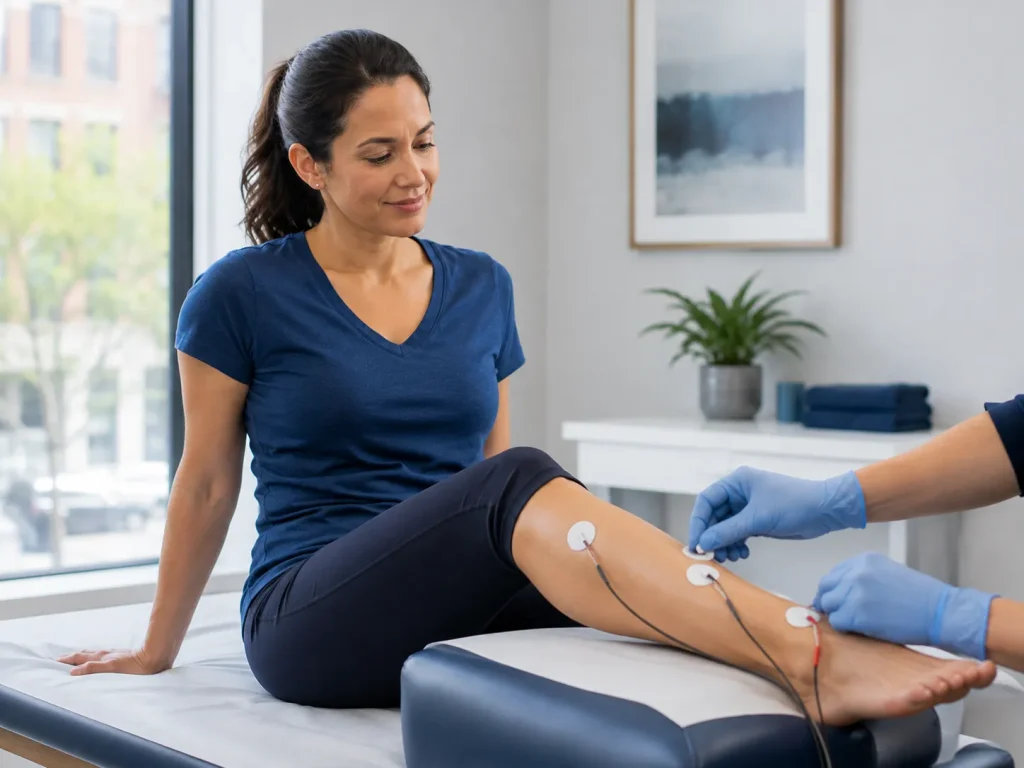
During the test, small sensors are placed on your skin over specific nerves. A gentle pulse is sent through the skin, and the sensors record how quickly the signal moves. The whole process is external, with nothing placed inside the body.
EMG vs. NCV: what's the difference?
EMG and NCV are two different tests that often work as a team, usually during the same appointment. Here is the simple version.
An NCV test looks at your nerves. It measures how fast and how strongly signals travel along them.
An EMG looks at your muscles. It records the electrical activity in a few muscles using a very thin needle electrode.
Nerves and muscles work together, so testing both gives your provider the fullest picture. The NCV can show whether a nerve signal is slowed or blocked, and the EMG can show how the muscle is responding. Not everyone needs both, and your provider will order what fits your symptoms.
Does an NCV test hurt?
An NCV test is usually easy to tolerate. You will feel brief, gentle pulses on your skin, similar to a light static shock or a quick tap. Each one lasts only a moment, and the sensation stops as soon as the pulse does.
Unlike the needle part of an EMG, a nerve conduction study does not involve any needles. There is no lasting pain, no sedation, and no downtime. You can drive yourself home and return to your normal day right away. If anything feels uncomfortable, tell the person performing the test and they will adjust.
What an NCV test can help find
A nerve conduction study can help identify a range of nerve problems, including:
Carpal tunnel syndrome, a common cause of hand numbness and tingling.
Peripheral neuropathy, which can cause numbness, tingling, or burning in the hands or feet.
Pinched or irritated nerves in the neck or lower back, known as radiculopathy.
Nerve injury or compression in the arms or legs.
Carpal tunnel syndrome, a common cause of hand numbness and tingling.
Peripheral neuropathy, which can cause numbness, tingling, or burning in the hands or feet.
Pinched or irritated nerves in the neck or lower back, known as radiculopathy.
Nerve injury or compression in the arms or legs.
The test does not treat these conditions. It gives your care team accurate information so they can choose the right next step, whether that is physical therapy, further care, or reassurance that your nerves are working as they should.
How fast can you get tested, and get results
Nerve testing should not mean a long wait. Hospital labs can carry lengthy waitlists. At Neuromuscular Diagnostics, most patients are scheduled immediately. A nerve conduction study on its own usually takes about 15 to 45 minutes, depending on how many nerves are checked.
A physician reviews your results and sends a report to your referring provider, so your care team can act on the findings quickly.

Frequently asked questions
Is an NCV test the same as an EMG? No, but they are closely related and often done together. An NCV test checks your nerves, and an EMG checks your muscles. Together they give a fuller picture.
Does an NCV test use needles? No. A nerve conduction study uses small sensors placed on the skin. Needles are only used in the separate EMG portion, if your provider orders that too.
How long does an NCV test take? On its own, usually about 15 to 45 minutes, depending on how many nerves are tested. If an EMG is done at the same visit, plan for a bit longer.
Can I drive myself home afterward? Yes. There is no sedation, so you can drive and return to your usual routine right after.
Do I need a referral? Nerve testing is typically ordered by a provider. If you think you may need it, ask your doctor, or have your provider send a referral to us.
Get clear answers, sooner
If numbness, tingling, weakness, or nerve pain has been slowing you down, a nerve conduction study can help find the cause. Neuromuscular Diagnostics offers NCV, EMG, and related testing in Chicago, located inside Muscle & Joint Physical Therapy in Ravenswood, with most patients seen within 1 to 2 days.
To ask a question or schedule, call 773-337-7747 or visit **neuromusculardiagnostics.com**. Providers can refer a patient through our For Referring Providers page.
This article is general health information, not medical advice, and reading it does not create a provider-patient relationship. Every person is different. Please talk with your physician or a qualified provider about your symptoms and whether nerve testing is right for you.