

Does an EMG Hurt? What to Expect at Your Nerve Test in Chicago
If your doctor has referred you for an EMG, you may be feeling a little uneasy. The name sounds technical, and the most common question we hear is a simple one: does it hurt? This guide walks you through what an EMG actually is, what the test feels like, how to prepare, and how quickly you can get answers here in Chicago. Our goal is to take the mystery out of it, so you can walk in knowing what to expect.
What an EMG actually measures
An EMG, short for electromyography, is a test that checks how well your muscles and the nerves that control them are working. It is often paired with a nerve conduction study, or NCV, which measures how quickly and strongly signals travel along a nerve. Together, these two tests give your provider a detailed picture of your nerve and muscle health.
Doctors use them to find the source of symptoms like numbness, tingling, weakness, or pain that other tests have not explained. In plain terms, an EMG helps answer a practical question: is a nerve or muscle the reason you feel this way, and if so, where is the problem?
Does an EMG hurt? Here is what it feels like
Here is the honest answer. An EMG involves some brief, mild discomfort, but most people find it far easier than they expected. The test usually has two parts.
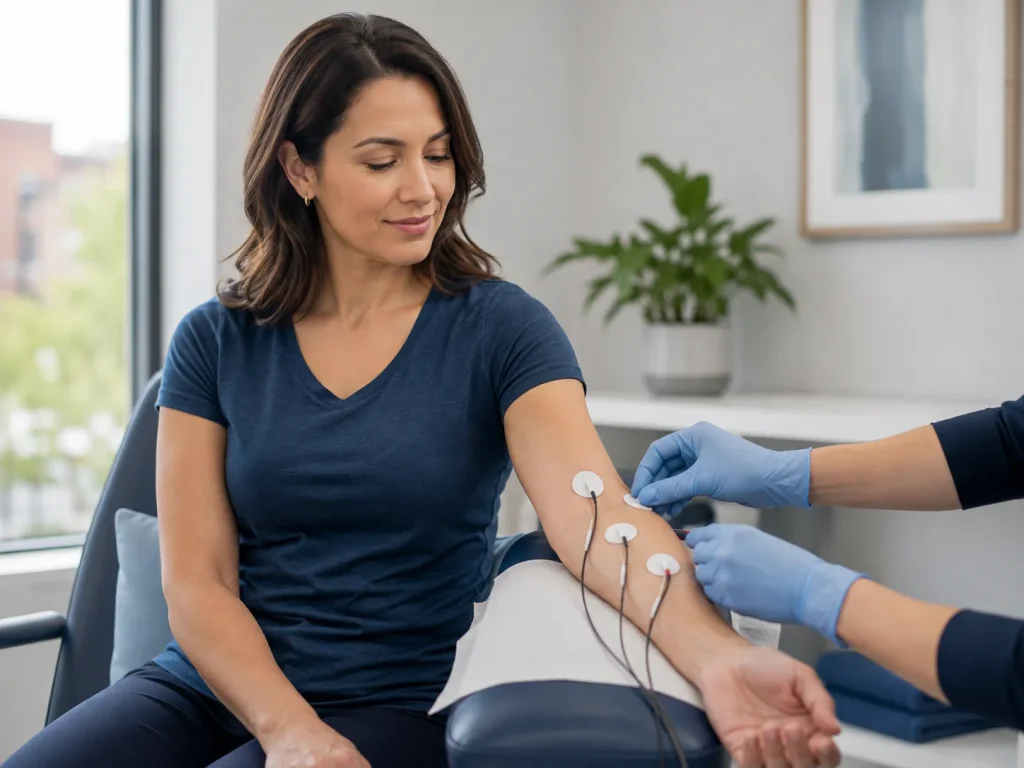
First is the nerve conduction study. Small sensors are placed on your skin, and you feel quick, gentle pulses, similar to a light static shock. Each one lasts only a moment.
Second is the needle portion. A very thin needle electrode is placed into a few muscles to pick up their electrical activity. Most people describe it as a small pinch or a dull pressure that passes quickly. It is not the same as a shot or a blood draw, and no fluid is injected.
There is no lasting pain, you do not need sedation, and you can drive yourself home and return to your day right after. If anything feels uncomfortable during the test, tell the person performing it and they will adjust.
How to prepare for your test
Preparing is simple. A few general tips help things go smoothly:
- Wear loose, comfortable clothing that allows easy access to the arms or legs being tested.
- Skip lotions, oils, or creams on your skin that day, since they can interfere with the sensors.
- Take your regular medications as usual, unless your provider tells you otherwise.
- Let the team know ahead of time if you take blood thinners, have a bleeding disorder, or have a pacemaker or other implanted device.
Your specific instructions may vary, so follow any guidance your provider or our team gives you.
How fast can you get in, and get results
One of the hardest parts of nerve testing is often the wait. Hospital electrodiagnostic labs can carry long waitlists. At Neuromuscular Diagnostics, most patients are scheduled immediately. The test itself usually takes about 30 to 60 minutes, depending on how many areas are being checked.
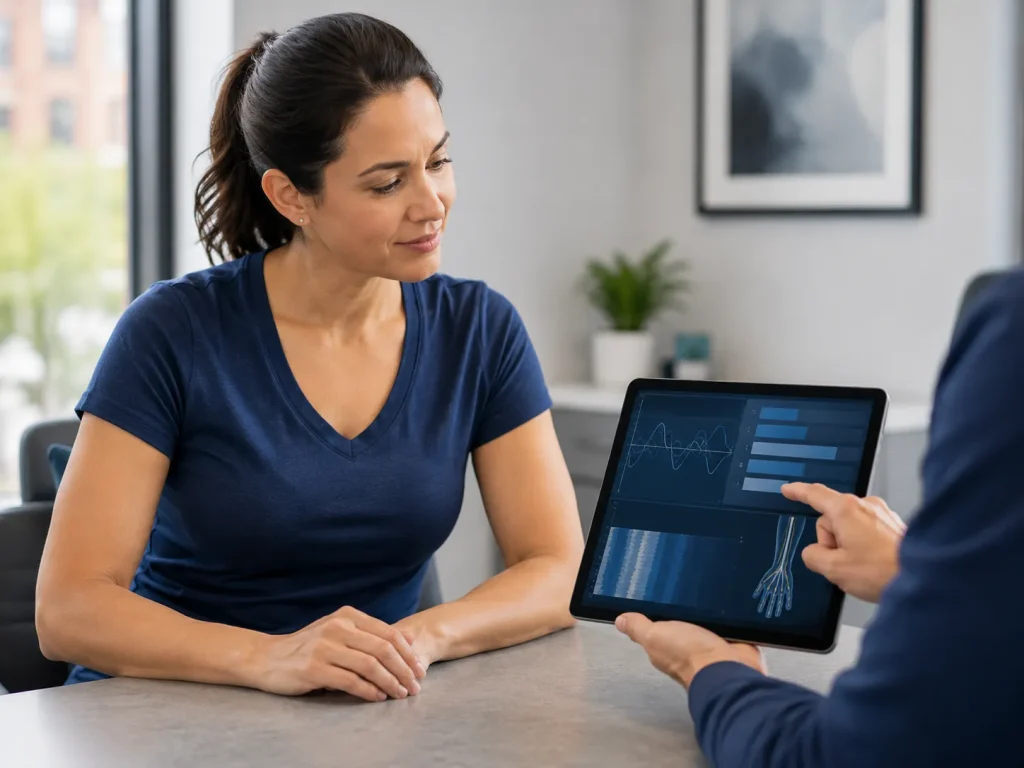
A physician reviews your results and sends a report to the provider who referred you, so you and your care team can move forward with a plan sooner rather than later.
Why your provider ordered an EMG
An EMG and NCV can help identify a range of nerve and muscle conditions, including:
- Carpal tunnel syndrome, a common cause of hand numbness and tingling.
- Pinched or irritated nerves in the neck or lower back, known as radiculopathy.
- Peripheral neuropathy, which can cause numbness or burning in the hands or feet.
The test does not treat these conditions. It gives your care team the clear, accurate information they need to choose the right next step, whether that is physical therapy, further care, or reassurance that nothing serious is going on.
Frequently asked questions
How long does an EMG take? Most tests take about 30 to 60 minutes, depending on how many muscles and nerves need to be checked.
Can I drive myself home afterward? Yes. There is no sedation involved, so you can drive and go back to your normal routine right after the test.
Do I need a referral for an EMG? Nerve testing is usually ordered by a provider. If you think you may need one, ask your doctor, or have your provider send a referral to us.
Will I get my results right away? A physician reviews your results and sends a report to your referring provider. Ask that provider about timing, since some findings can be discussed at your visit.
Is an EMG safe? Yes. It is a routine, low-risk test. Just let the team know if you take blood thinners or have an implanted device such as a pacemaker.
Get clear answers, sooner
Getting a clear answer about nerve or muscle symptoms should not mean waiting months. Neuromuscular Diagnostics offers EMG, NCV, and related testing in Chicago, located inside Muscle & Joint Physical Therapy in Ravenswood, with most patients seen within 1-2 days.
If you have questions or want to schedule, call 773-337-7747 [[verify]] or visit **chicagoemgtesting.com**. Providers can refer a patient through our For Referring Providers page.
This article is general health information, not medical advice, and reading it does not create a provider-patient relationship. Every person is different. Please talk with your physician or a qualified provider about your symptoms and whether nerve testing is right for you.